
If you’ve ever winced while trying to touch your toes or felt tightness just bending over to tie your shoes, you’re not alone. Flexibility often takes a back seat to strength or cardio in most people’s fitness routines but it’s just as essential. Good flexibility means fewer injuries, better posture, smoother movement, and even less stress trapped in the body. The good news? You don’t need to be a gymnast or commit hours a day to see real changes. In just one week, with a consistent practice of targeted yoga poses, you can unlock areas of tension and move with noticeably more ease.
Below are seven yoga poses that zero in on tight hips, hamstrings, spine, and shoulders—those stubborn spots that tend to resist stretching. Practice these daily, even if just for 10–15 minutes, and you’ll feel more fluid and less stiff by the end of the week.
1. Downward-Facing Dog (Adho Mukha Svanasana)
A staple in nearly every yoga class, Downward Dog stretches your entire posterior chain—meaning everything from your calves to your shoulders.
How to do it:
Start on your hands and knees. Tuck your toes, lift your hips toward the sky, and straighten your legs as much as you comfortably can. Your body should form an inverted V.
Why it works:
This pose elongates the spine, opens the shoulders, and stretches the hamstrings—all in one go. Plus, the gentle inversion promotes blood flow and eases tension across the back.
Pro tip:
Keep a slight bend in your knees if your hamstrings feel tight. Focus on length in the spine more than getting your heels to the ground.
2. Standing Forward Fold (Uttanasana)
One of the simplest stretches, but don’t underestimate its impact. Forward Fold is your hamstrings’ best friend.
How to do it:
From standing, exhale and hinge forward from your hips. Let your head hang heavy, and reach toward your toes or the floor.
Why it works:
This stretch decompresses the spine, loosens the calves and hamstrings, and encourages your nervous system to relax. Done regularly, it helps you fold deeper and stand taller.
Try this:
Bend your knees slightly and rest your chest on your thighs if you’re just starting out. As your flexibility improves, gradually straighten your legs.

3. Butterfly Pose (Baddha Konasana)
Tight hips? This one’s for you. Butterfly Pose gently opens the inner thighs and groin, which can be especially tight if you sit a lot or drive often.
How to do it:
Sit with your knees bent and soles of your feet together. Hold your feet or ankles and allow your knees to drop toward the floor.
Why it works:
It targets your adductors (inner thighs) and hip joints, helping you sit more comfortably cross-legged and walk with a freer gait.
Want more stretch?
Gently press your elbows into your thighs, or hinge forward from the hips for a deeper release.
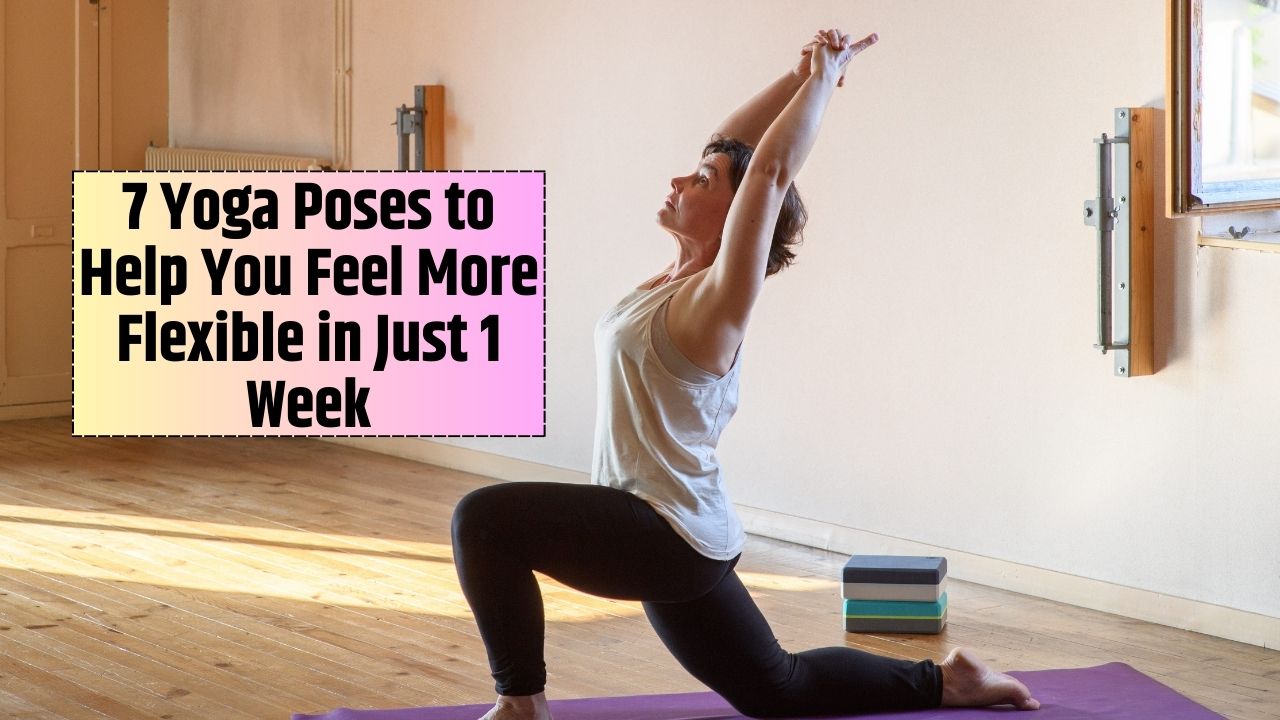
4. Low Lunge (Anjaneyasana)
This one’s a hip flexor lifesaver—especially for anyone glued to a desk most of the day.
How to do it:
Step one foot forward into a lunge with the opposite knee resting on the mat. Keep the front knee stacked over the ankle. Raise your arms overhead or place them on your thigh.
Why it helps:
Low Lunge deeply opens the hip flexors and quads while encouraging spinal extension. It counters the shortening of muscles caused by prolonged sitting.
Bonus:
Lift your chest and gaze slightly upward to add a backbend that opens the front body.
5. Pyramid Pose (Parsvottanasana)
Don’t be fooled by its stillness—Pyramid Pose is a deep hamstring and calf stretch disguised as a standing pose.

How to do it:
Step your feet 3–4 feet apart, with your front foot facing forward and your back foot slightly turned in. Hinge forward over your front leg, keeping both legs straight.
Why it works:
This pose stretches the hamstrings, glutes, and spine, while also building balance and stability in the legs.
For beginners:
Place your hands on blocks or your shin instead of reaching for the floor.
6. Cobra Pose (Bhujangasana)
Time to open the front body. Cobra Pose stretches your abdominal muscles, chest, and spine—great for reversing slouching or screen time posture.
How to do it:
Lie face-down with your hands under your shoulders and elbows close to your ribs. Inhale as you lift your chest, keeping your lower ribs on the ground. Keep your legs extended and feet pressing into the mat.
Why it helps:
It strengthens the back while improving spinal flexibility and posture. It’s also great for gently stimulating energy in the morning or cooling down at night.
Don’t overdo it:
Avoid locking out your arms. Keep a micro-bend in your elbows and focus on lifting with your back muscles—not just pushing up with your hands.
7. Lizard Pose (Utthan Pristhasana)
This deep hip opener stretches areas we rarely target: the hip flexors, groin, and even the muscles around the pelvis.
How to do it:
From a low lunge, bring both hands to the inside of your front foot. Walk your foot out slightly to the edge of your mat. Optionally, drop your elbows to the ground or a block.

Why it works:
It releases tension from deep within the hips—an area where a lot of stress and emotion is stored. The pose also improves mobility for movements like squatting, walking, or running.
Ease into it:
Don’t force your elbows down. Support yourself with your hands or props if needed.
Be Consistent, Not Perfect
The key to increasing flexibility is not forcing your body into deep poses—it’s showing up every day with patience and breath. Flexibility doesn’t come from “stretching harder.” It comes from stretching regularly.
You may not touch your toes on day one. That’s okay. But by day seven, you’ll feel a shift—more mobility in your hips, less stiffness in your back, and an overall lightness in your movements.
Stick with these poses, tune in to your breath, and respect your body’s limits. Progress will follow.
FAQs
Can I really improve flexibility in one week?
Yes while you won’t become fully flexible overnight, daily stretching can lead to noticeable progress in how your body moves and feels.
How long should I hold each pose?
Aim for 30 seconds to 1 minute per pose. You can hold longer if it feels good. Just remember to breathe deeply.
Should I do these poses in a specific order?
The sequence above flows well from full-body stretches to deep hip openers. You can follow it as is or modify to fit your needs.
Is it better to stretch in the morning or evening?
Both are beneficial. Mornings help loosen stiffness; evenings are great for deeper release. Choose what fits your schedule.
What if I feel pain during a pose?
Back off immediately. Discomfort is okay—sharp pain is not. Use props, bend your knees, or modify as needed.